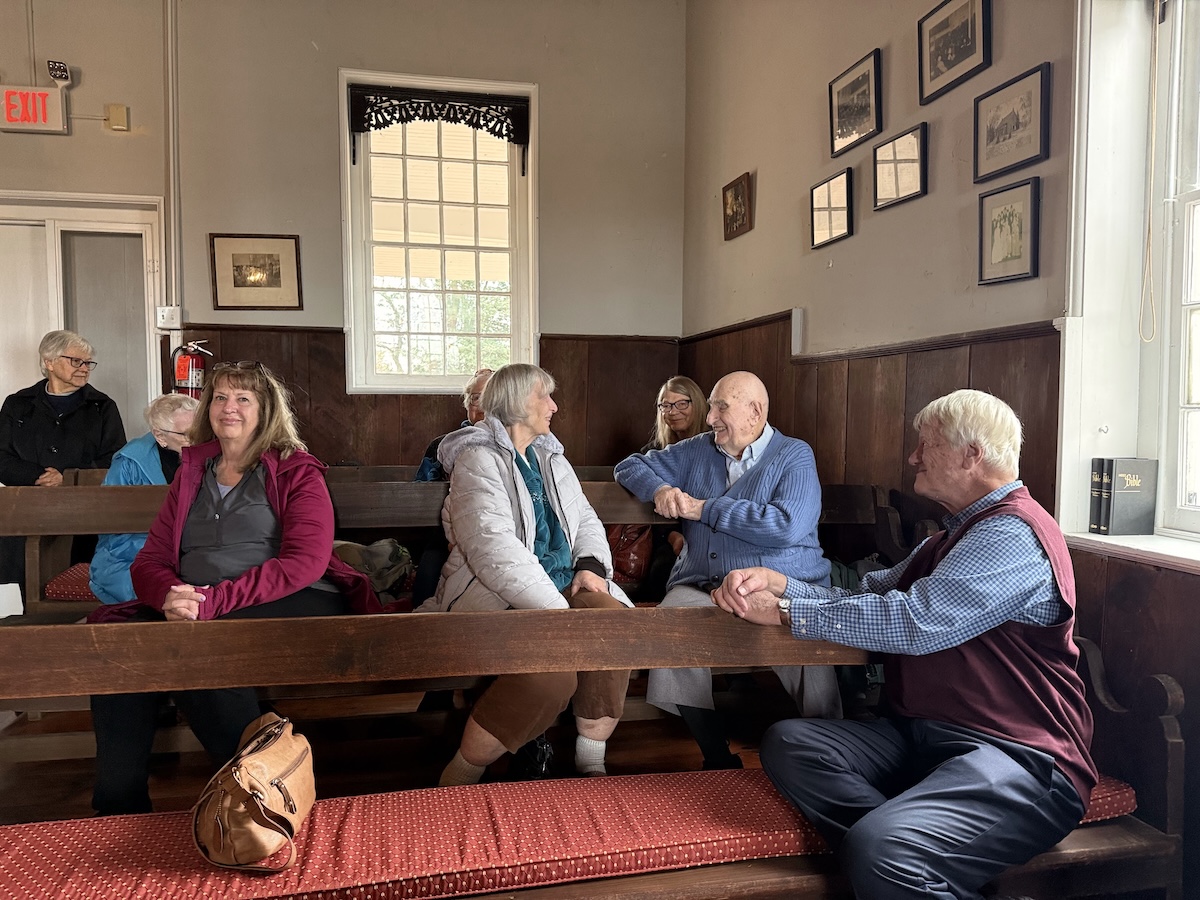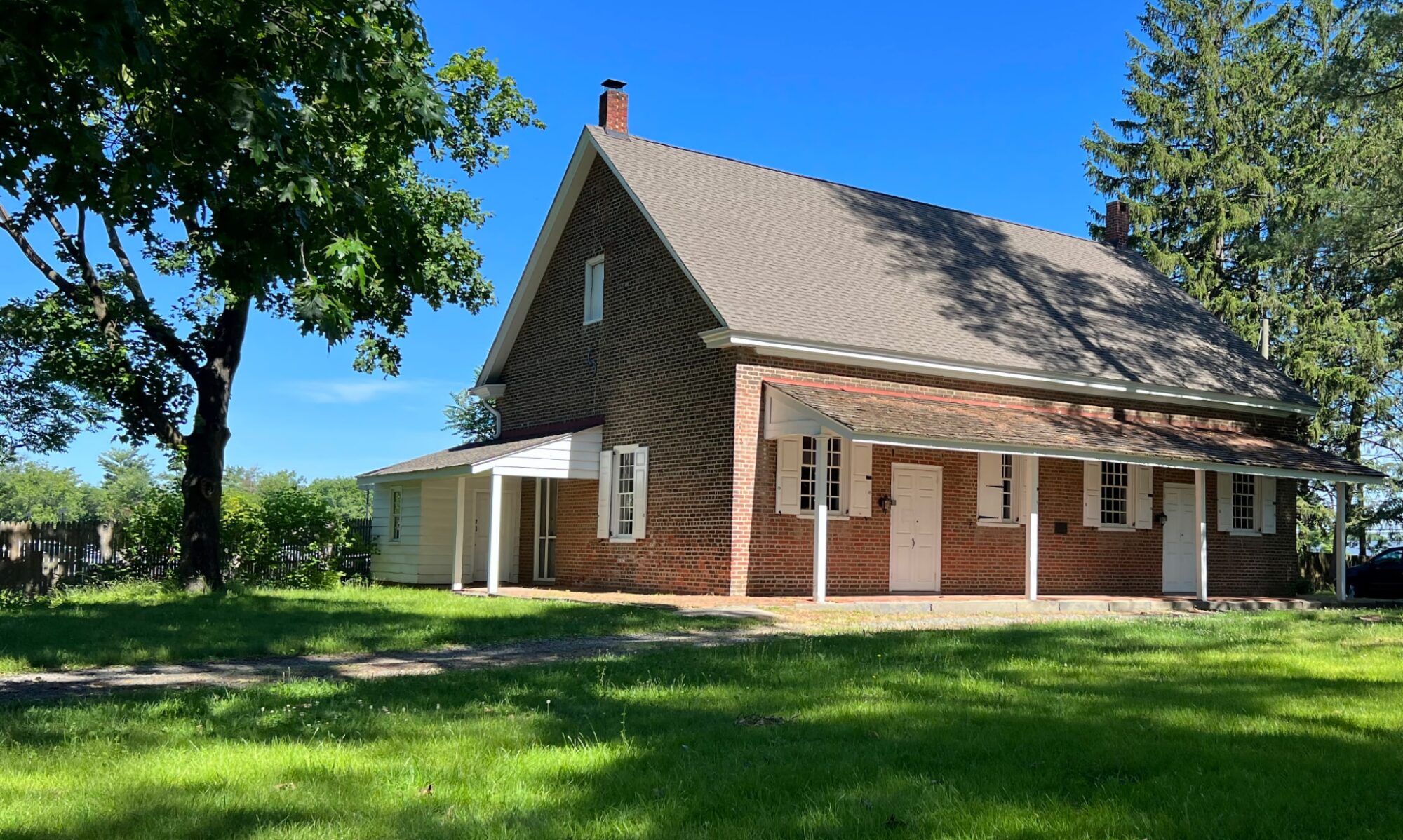

On Sunday, October 18, Cropwell Quaker Meeting sprung open the doors for its second Open House. About thirty Friends, neighbors, and curious seekers came to learn more about Quakerism and the community at Cropwell.
Back in 2021, Cropwell was down to two regular attenders on Sunday mornings. A group of supporters from nearby Quaker meetings rallied together to host an Open House and follow it up with months of interesting programs. All the activity worked to attract new attenders. Of course all communities are ever-shifting and fragile. Illnesses, family business, death, and complicated lives have drawn regular attenders away. Earlier this year Cropwell Meeting decided to hold another Open House on the five-year anniversary, to re-introduced the meeting to neighbors.


The program started at 12:30pm with conversation, tours of the meetinghouse and (of course!) good food. In the background a continuous video feed from the QuakerSpeak video series “What Do Quakers Believe?” playlist (sound off, subtitles on). There were a lot of hugs, greetings, and handshakes as old Friends showed up and new ones introduced themselves. A white board set up outside on the porch welcomed visitors and gave them the schedule. Literature and flyers from Haddonfield Quarter, American Friends Service Committee, Friends Journal, and other Quaker organizations were spread out on tables throughout the space.
For the first presentation, Charles Bruder of the John Woolman Memorial came back to Cropwell in the persona of seventeenth-century abolitionist John Woolman of nearby Mt. Holly. In the worship room and in character, Charles shared the spiritual journeys of George Fox, William Penn, and John Woolman himself. He concluded with a sermon from Woolman on loving neighbors and God based on Mark 12:30-31.
The prayer was a perfect segue to a “worship sampler” the meeting had planned. Knowing newcomers might be put off by a full hour of worship, the group settled was ten or fifteen minutes of silence. Cropwell Meeting clerk Martin Kelley delivered ministry based on the Parable of the Sower from Luke 8, concluding with a prayer that Cropwell might continue to serve as good soil for a spiritual community.


Eating, informal discussions, and meetinghouse tours continued after worship. About forty-five minutes later the second program started. Mimi Scalia of Mt. Holly Meeting gave a presentation on Alternatives to Violence Project (AVP), a program started over fifty years ago by incarcerated men in a New York State prison. It has expanded in that time to help all sorts of communities learn to overcome violent behavior. Mimi told personal stories of working in the nearby Fort Dix prison as well as traveling all the way to India to present AVP workshops there. The Q&A session afterwards was very active.
Outreach for the event had included multiple messages on our email lists, postings to various local Facebook groups, invitations to the nearby homeowner’s association, notices in various local Quaker meeting email newsletters, event listings with Philadelphia Yearly Meeting and South Jersey Quakers, and an invitation to the township. One visitor said he had learned about it from a listing of events for Camden County. It seems a good practice to periodically celebrate a community and issue a general invitation. It is hoped that some of the visitors will start worshiping with the meeting on a regular basis. Even people who saw the publicity and didn’t come are more likely to think about the meeting in the future. Below is the flyer used for publicity: